
About St Barnabas Church
-
Why Here?
Visitors often ask “Why is this extraordinary church here, apparently in the middle of nowhere?”
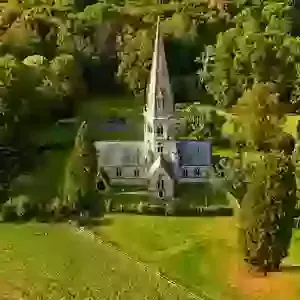
The Cubitt family created The Denbies estate and commissioned the architect George Gilbert Scott to build a church on the estate, requesting a “small scale cathedral” built on edge of the family garden.
Gilbert Scott obliged, creating the ‘cathedral in the woods’ in 1859 to serve The Denbies estate.
Why Here?
Visitors often ask “Why is this extraordinary church here, apparently in the middle of nowhere?”
The Cubitt family created The Denbies estate and commissioned the architect George Gilbert Scott to build a church on the estate, requesting a “small scale cathedral” built on edge of the family garden.
Gilbert Scott obliged, creating the ‘cathedral in the woods’ in 1859 to serve The Denbies estate.
-

About St Barnabas Church
Built in the Gothic Revival style, it is considered one of Gilbert Scott’s original gems. It has a 45m high octagonal tower, tall slender spire and one of the finest ‘rings’ of eight bells in southern England. The tenor bell weighs just under 1 ton.
About St Barnabas Church
Built in the Gothic Revival style, it is considered one of Gilbert Scott’s original gems. It has a 45m high octagonal tower, tall slender spire and one of the finest ‘rings’ of eight bells in southern England. The tenor bell weighs just under 1 ton.
-
Cubitt Chapel
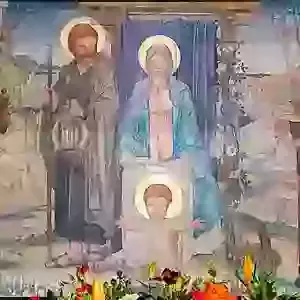
In 1920 the South Transept was converted into a chapel by the Second Baron Ashcombe, Henry Cubitt, in memory of his three sons killed during the First World War. The altarpiece Adoration of the Magi and the mural paintings on the east wall are by E Reginald Frampton, known as “the last of the pre-Raphaelites”.
Cubitt Chapel
In 1920 the South Transept was converted into a chapel by the Second Baron Ashcombe, Henry Cubitt, in memory of his three sons killed during the First World War. The altarpiece Adoration of the Magi and the mural paintings on the east wall are by E Reginald Frampton, known as “the last of the pre-Raphaelites”.